2026-09-06 · Mike Torres
Standing Seam vs. Exposed-Fastener Metal Roofs: Which Is Better for Houston Homes?
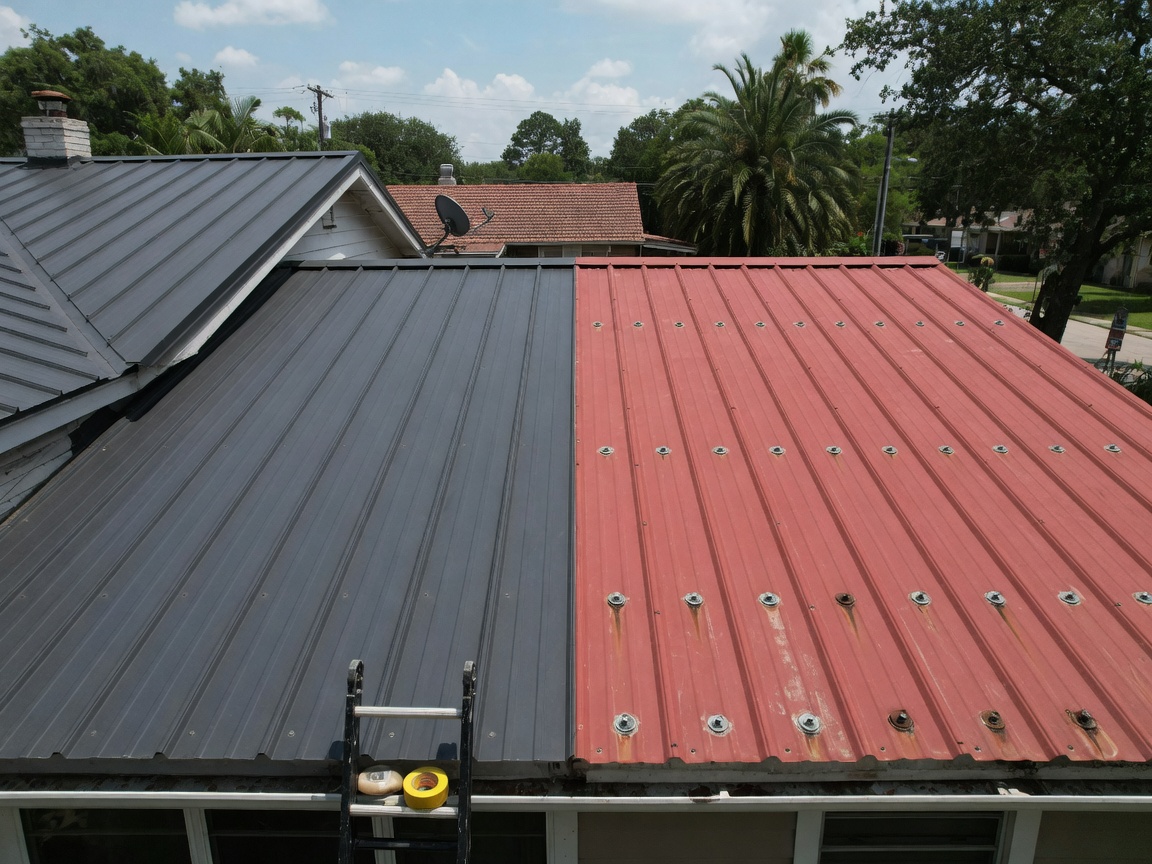
Standing seam metal roofs are the stronger choice for most Houston homes over exposed-fastener systems because they eliminate exposed screws that corrode faster in Harris County's subtropical humidity and occasional heavy rains. This holds especially true in neighborhoods like Montrose, River Oaks, Heights, Midtown, and Downtown where many homes date from the 1920s to 1970s and feature steeper pitches or complex rooflines that benefit from hidden fasteners.
Weather Performance in Houston's Subtropical Climate
Houston's hot humid summers and mild winters create constant moisture that attacks metal roofing fasteners. Exposed-fastener panels rely on screws that penetrate the metal and require periodic re-sealing every 5–8 years to prevent leaks, while standing seam panels use concealed clips that allow thermal expansion without stressing the roof surface. In areas near the Houston Zoo or Museum of Fine Arts where tree cover adds shade and moisture retention, standing seam reduces the risk of trapped condensation under the panels. Homes in nearby Katy, Sugar Land, and Pearland face similar conditions plus occasional wind-driven rain, making the seam design's superior water shedding a practical advantage during summer thunderstorms.
Installation on Local Housing Stock
Many homes in the Heights and Midtown have older rafters spaced 16–24 inches that require additional strapping for metal panels. Standing seam installation typically involves 1-inch to 1.5-inch clips fastened to the deck, allowing the roof to float and move with temperature swings common in Harris County. Exposed-fastener panels go down faster on simple gable roofs common in Midtown but demand precise screw placement to avoid over-tightening that dimples the metal. Installers working near Space Center Houston or Minute Maid Park often note that standing seam handles the slight roof movement from nearby rail lines and traffic vibration better over decades.
Longevity and Maintenance Realities
A properly installed standing seam roof in Houston lasts 40–60 years with minimal intervention, while exposed-fastener systems often need screw replacement or panel resealing after 15–25 years due to rust at penetration points. Homeowners in River Oaks and West University Place who prioritize low maintenance favor standing seam because it avoids the annual inspection of hundreds of exposed screws. Both systems resist the mild winters here, yet the concealed fastener approach reduces the chance of water intrusion during the humid months when roofs stay damp for days after rain. See details on standing seam metal roofing and read Can a Metal Roof Withstand Hail and Hurricane-Force Winds in Houston? for storm-specific performance data.
Cost Considerations for Houston Homeowners
Material and labor for standing seam typically runs higher upfront than exposed-fastener options, yet the longer service life offsets the difference for owners planning to stay in place. Factors such as roof pitch, number of valleys, and access in dense neighborhoods like Downtown affect pricing more than generic square-foot estimates. Check current local ranges in How Much Does a Metal Roof Cost in Houston?. Energy performance also factors in; many standing seam profiles accept thicker insulation layers that improve efficiency in Houston's long cooling season. Compare options in Are Metal Roofs More Energy Efficient for Houston Homes?. Metal Roofing Champs operates from 8700 Long Point Rd, Houston, TX 77055 with hours Mon–Fri 8am–6pm and Sat 9am–2pm for consultations on either system.