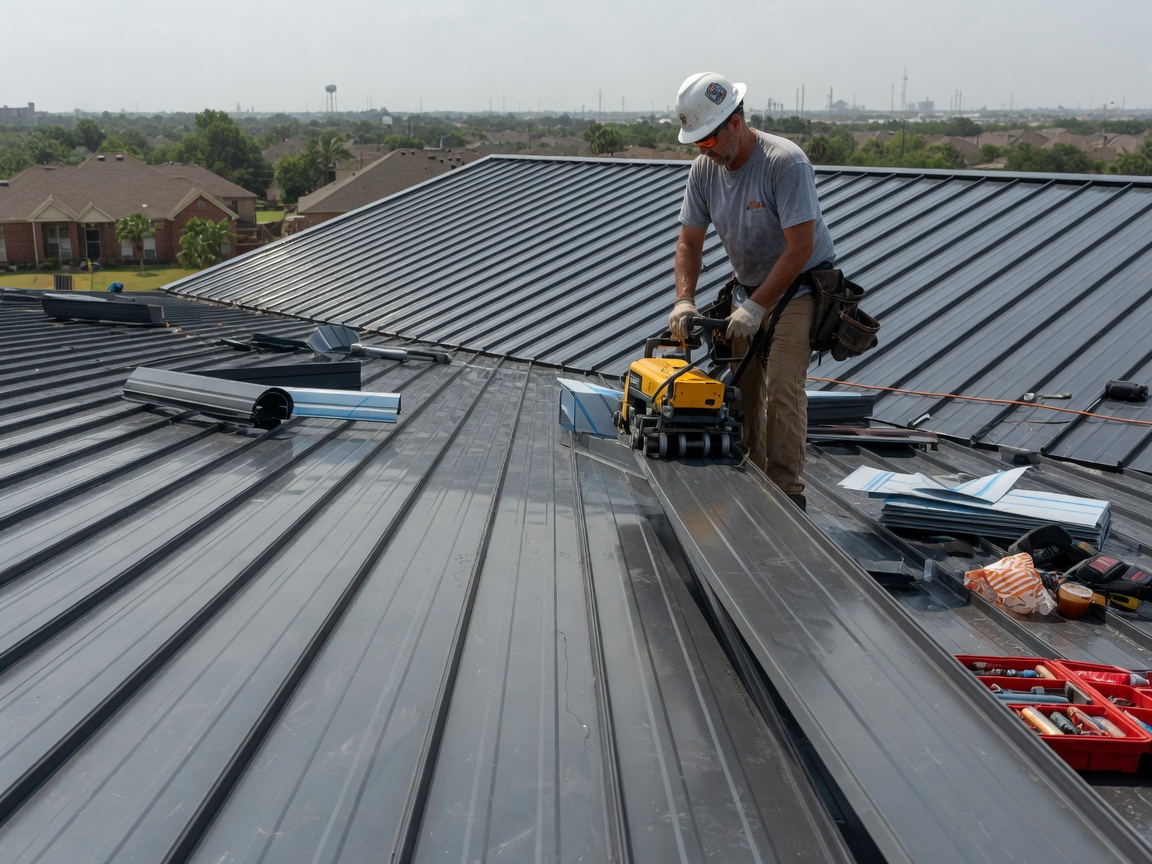
Houston's subtropical climate brings prolonged humidity and temperature swings that cause metal panels to expand and contract daily. Standing seam systems handle this movement better than exposed-fastener roofs because the seams float on clips, reducing oil-canning and fastener leaks common on older homes in the Heights and Montrose. Proper clip spacing and thermal breaks become critical when roofs sit over unvented attics typical in 1950s–1970s construction throughout Harris County.
Many homes in River Oaks and Midtown feature low-slope sections or complex valleys near large live oaks that shed debris year-round. Standing seam allows custom panel lengths up to the ridge without horizontal laps, cutting leak points. Installers must account for the 40–50 mph wind gusts that accompany summer thunderstorms and verify attachment patterns meet local wind-load expectations without over-driving clips into aged decking.
Katy and Sugar Land additions often sit on slightly higher ground with better drainage, while parts of Pearland see more ponding after heavy rain. These differences change underlayment choices and eave detailing. Crews routinely add extra high-temperature ice-and-water shield along valleys and around penetrations when working in these pockets to manage the moisture load from afternoon humidity.
Technician insight
In Houston the thing that catches most people out with standing seam metal roofing is underestimating daily thermal movement on unvented attics in 1960s Heights homes. The humidity keeps the deck warmer at night than folks expect, so if you space the clips too far apart the panels start oil-canning within the first summer. We always check deck thickness and add rigid thermal breaks on those older structures.
Montrose 1965 Bungalow Re-Roof
The existing galvanized roof had corroded seams and was leaking into the kitchen after repeated summer storms. We found the deck was still solid but the original fixed clips had allowed too much movement. New 24-gauge standing seam panels were rolled on-site with floating clips and extra membrane at the two large valleys. The roof now sheds water cleanly and the homeowner reports no more interior stains after the next heavy rain.
Standing Seam Metal Roofing Services We Offer
✓Standing Seam Panel Installation
Custom 24- or 26-gauge panels rolled on-site to fit complex roof planes in Montrose and Heights homes without horizontal seams.
✓Snap-Lock and Mechanically Seamed Systems
Snap-lock panels for slopes of 3:12 and steeper, mechanically seamed double-lock panels for the low-slope sections common on Midtown properties.
✓Clip and Thermal Break Upgrades
Replacement of fixed clips with floating clips plus rigid insulation strips to control expansion in Houston's daily heat cycles.
✓Valley and Eave Detailing
Custom-formed valleys and extended eave flashing sized for live-oak debris and sudden summer downpours common across Harris County.
✓Standing Seam Leak Repairs
Targeted seam resealing and clip replacement on existing metal roofs showing oil-canning or fastener corrosion after humid summers.
✓Ridge and Hip Cap Installation
Vented or solid ridge caps matched to standing seam profiles for proper attic ventilation in older Midtown and Downtown homes.
Standing Seam Metal Roofing Cost in Houston, TX
| Service | Typical Range | What Affects It |
|---|---|---|
| Standing seam installation | $9–$16 per sq ft | Higher end for steep pitches, multiple valleys, or homes in River Oaks with limited access. |
| Clip and thermal upgrade | $2–$4 per sq ft | Added when replacing older exposed-fastener systems on 1950s–1970s homes. |
| Valley and penetration detailing | $450–$950 per feature | Custom soldered or mechanically seamed details around skylights and chimneys. |
| Leak repair visit | $350–$650 | Includes seam resealing and clip replacement on existing standing seam roofs. |
Ranges are typical for Houston, TX and confirmed with an exact written quote before any work starts.
How it works
- 1
Site Assessment
Measure roof planes, note deck condition, and check for low-slope areas typical in 1960s Heights construction.
- 2
Panel Layout And Material Selection
Choose gauge and finish for UV and humidity exposure while confirming wind-load attachment patterns.
- 3
Underlayment And Clip Installation
Apply high-temperature membrane at valleys and eaves, then set floating clips at engineered spacing.
- 4
Panel Roll And Seaming
Roll panels on-site, lock seams with mechanical seamer, and install custom flashings around penetrations.
- 5
Final Inspection And Cleanup
Check seam integrity, verify ventilation, and remove all debris before leaving the site.
Pricing
Pricing varies by roof complexity, access, and existing deck condition. Quotes are provided after on-site measurement.